Three card tarot spread: past, present, future
A three-card tarot spread gives each card a role: past, present and future. Learn how to set the question, read each card, and connect all three honestly.
 Multifate
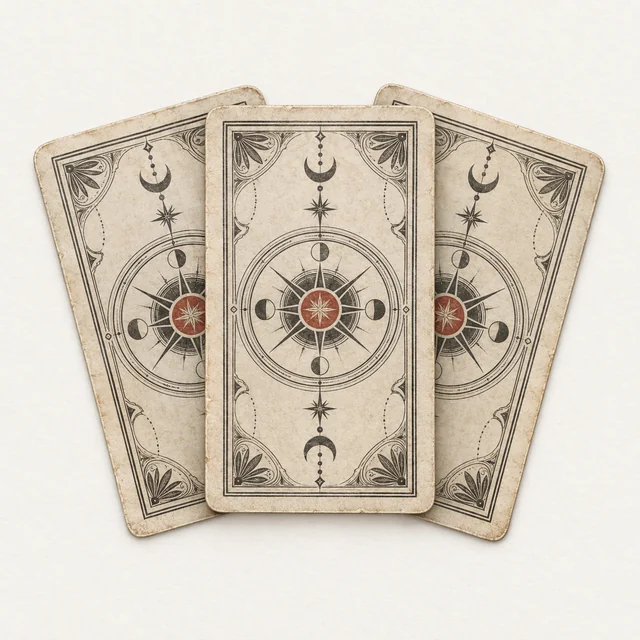
A tarot reading rests on which card came up, where it landed in the spread, and whether it came up upright or reversed. The standard deck has 78 cards: 22 in the major arcana and 56 in the minor arcana, split across four suits. No card carries a fixed verdict. The same card reads one way in the past position and another in the next position, and it shifts again under a different question.
A three-card tarot spread gives each card a role: past, present and future. Learn how to set the question, read each card, and connect all three honestly.
These guides are written for people who want to learn tarot from the first draw. They begin with the three-card spread the free tool uses and show how to read past, present and next as positions rather than as predictions, how to keep a reversed card from becoming an automatic bad sign, and how to write a question narrow enough that the answer can be checked against your own situation.
The free tarot tool draws three cards once, puts the meaning of each position beside it and leaves the cards as they fell. You can bring a question of 8 to 600 characters, and a reading afterwards answers that question and names the card and position it draws on.
Tarot maps the roles, tensions, and possible movement surrounding a present question through a fixed symbolic card spread.
A spread records each card, the position it fell in, and whether it is upright or reversed. What can be read comes from those three together, never from one card alone.
Tarot is a reflective symbolic practice, not proof of future events. Use it to surface assumptions and choices, never as medical, legal, investment, gambling, or crisis advice.
Start with one small spread and one real question. Learn what each position asks before memorising card meanings: a three-card spread asks you to read only three cards, each in its own role. Write one sentence per position before you try to combine them.
Not automatically. A reversed card can soften or complicate the card’s usual meaning, and how far depends on the card and the tradition you follow. Read it in its position and against your question before deciding what it adds.
No. You can learn how a reading is put together with the free tool, which draws from a full 78-card deck and names each position. A physical deck becomes useful once you want to practise shuffling and laying out spreads yourself.