How to cast a Meihua Yishu hexagram from numbers
How to cast a Meihua Yishu hexagram from three numbers: which number sets each trigram, how the moving line is chosen, and how to check the result.
 Multifate
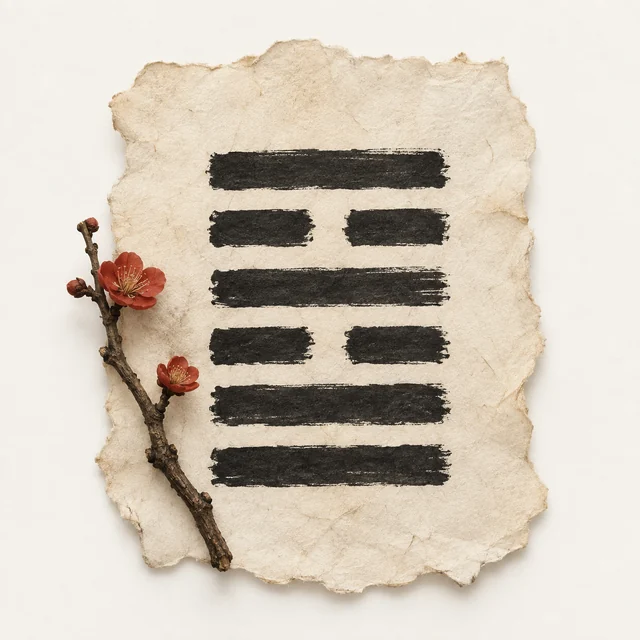
Meihua Yishu, often translated as plum blossom numerology, answers a single question with a hexagram instead of a birth chart. Two trigrams are stacked into six lines, one line is marked as moving, and flipping that line from yin to yang or back gives the changed hexagram. A reading compares the original figure with the changed one and weighs the trigram that moves, called use, against the one that stays still, called body.
How to cast a Meihua Yishu hexagram from three numbers: which number sets each trigram, how the moving line is chosen, and how to check the result.
The guides here start where beginners most often slip: the arithmetic. In the number method the tool follows, the first number sets the upper trigram and the second the lower one, each by its remainder after dividing by eight, with zero counted as eight. The third number sets the moving line by its remainder after dividing by six. From there the articles cover counting lines from the bottom, telling the mutual hexagram apart from the changed one, and what a body and use relation, such as use supporting body, is meant to describe.
The free Meihua tool casts from three numbers between 1 and 99 or from the present moment, in which case it counts the year branch, the lunar month and day, and the two-hour period. The same inputs always give the same hexagram, so you can check a cast by hand before reading any interpretation of it.
Meihua Yishu reads the relationship between the asker, the situation, and the direction of change through a primary and changing hexagram.
A time or chosen-number input produces the upper and lower trigrams, the moving line, and the body-use relation. Change the input and all of them change with it.
The hexagram offers a traditional model of change, not a guaranteed prediction. Its value lies in careful reflection on timing, position, and response.
Meihua Yishu is a Chinese method of divination that casts a hexagram from numbers or from the moment a question is asked, then reads the original, mutual and changed hexagrams together with the relation between body and use. It needs no birth date: each question gets its own cast.
The trigram holding the moving line is use, and the other trigram is body. The reading then looks at how their elements relate, for example whether use supports body, body controls use or the two share an element. These are traditional symbolic relations, not a numerical forecast of success.
Yes. With the same three numbers and the same method, the original hexagram, the moving line and the changed hexagram stay the same. Only the wording of an interpretation can vary, so when two results differ, check the order of the numbers and the casting method first.